
by CrimePsych | Jul 15, 2019 | Blog
Organised crime is a diverse area of study. There are numerous groups of individuals involved in a wide variety of activities that come under this type of offending. Organised crime is defined by the UN and EU as “a group of three or more persons existing over a period of time acting in concert with the aim of committing crimes for financial or material benefit.” Organized crime is a category of transnational, national, or local groupings of highly centralized enterprises run by criminals who intend to engage in illegal activity, most commonly for profit. Some criminal organizations, such as terrorist groups, are politically motivated.
For organised crime to exist, three or more offenders must come together to carry out an illegal act or acts. Therefore, some communication and cooperation are necessary. There can be as little as three individuals for illegal activities to be defined as organised crime, or thousands of individuals. These groups of criminals can be complex and flexible in nature. There is usually some structure to these groups; however, it is unlikely to be as tightly structured as legal organisations. Some of these networks of criminals are loosely structured while others more tightly so. This usually depends on the criminal activities its members are engaged in.
There is a vast range of activities that organised crime groups can be involved in. The underlying goal is usually either money or power. Some criminal networks are involved in drug trafficking and distribution. There will usually be a hierarchical structure to these networks. There is likely to be a group of core individuals with roles and responsibilities and these are the individuals who usually profit the most from their activities. So if it were a drug trafficking group, these would be the ones who manufacture or supervise the acquisition of the drugs. These are international activities and would require a distribution network in order to make a profit. This network of individuals would require a way to package and ship the drugs between the various countries. Once drugs have arrived at the country they are destined for, they need to be repackaged into smaller quantities and distributed throughout the country. These drugs would then require individuals to sell them to people. An operation such as this would require communication and cooperation on an international level. This would require hundreds of criminals working towards the same goal and accepting their role s and responsibilities within the group.
The individuals who are ‘higher’ within this hierarchy may never know or meet the people who sell the drugs on the streets. Therefore, the lower ranking individuals would be required to take a level of responsibility and manage others. If any individual does not do as they are required some form of retribution must be administered. Criminal networks such as this would require a higher level of organisation and hierarchy than others might.
The underlying goals and skill set of these individuals determines what level of organisation, communication, and interaction these groups will have. The criminal networks may offer some kind of specialised skill set. These skills may be, for example, money laundering, counterfeit currency, or document fraud. Groups such as these will often serve other criminals or groups. This usually always involves some form of social interaction. It is because of these social interactions that reflect the importance of group structure.
Some organised crime groups will be involved with activities involving innocent people. For example, child sexual exploitation or people trafficking for slavery. In groups such as this, the victims involved are treated as commodities which are used to make money. These types of victims often come from poorer countries and are either kidnapped or promised a better life if they comply with their captors.
Other networks may deal with large companies on a corporate level. Companies may wish to evade paying more tax than they ought to and so will turn to an organised crime group to help them in some way. The corporate industry is rife with companies wishing to invest fraudulently, avoid paying excise duty, VAT fraud and so on. By employing the services of these expert criminals they avoid having to carry out any illegal activities directly.
Individual criminals and criminal groups are flexible and quickly adapt to exploit new victims, to evade countermeasures or identify new criminal opportunities. There is often violence and extortion involved throughout the network of individuals. These criminal networks can operate in a variety of ways and can even be involved in our everyday sporting activities. There have been convicted cases of sports corruption and match-fixing in a number of sporting events.
These networks of criminals can be large or small scale in activities such as drug dealing or dealing firearms. The rich and powerful may employ their services for the prestige of having the head of some endangered species hanging in their home. The common feature of these groups is that they show some level of structure within them. There will be a core group of individuals that coordinate the network’s activities. Below this, there will be key central figures who will engage in planning and organisation such as the distribution of drugs.
Below these key central figures will be the various subgroups. These subgroups will often have a variety of skills in different areas. For example, they may be involved in distribution, manufacture, communication, protection, and in cases of sexual exploitation skills such as kidnapping and media distribution. Within these subgroups, there will be mid-level workers who communicate between the ‘workers’ and the ‘leaders’. These mid-level workers are usually well respected and trusted individuals who communicate either within or between gangs.
At the very bottom level of the criminal networks are isolated individuals. These would be the burglars and thieves that go and steal where they are instructed to. They may very be asked to steal particular objects or vehicles. These individuals are not usually given any responsibility within the organisation. This may not be a static set of individuals. These isolated individuals Can change over time as people go to jail and new people are recruited.
Unsurprisingly then, there is not one particular theory of organised crime. One theory would not be able to apply the same rules and principles to drug dealers as it would to say, the Triads or IRA. Large gangs such as the Triads or IRA could not be compared directly to local neighbourhood gangs around London. However, all of these criminal networks usually involve some form of hierarchical structure.
by CrimePsych | Jul 8, 2019 | Blog
When we think about terrorists, we have a certain set of assumptions that we make about the individual or the groups involved. Terrorism can be politically or ideologically driven. Terrorist groups are frequently in the news due to their acts which can either be on a large scale, such as the blowing up of the twin towers in 2001, or smaller instances such as suicide bombers who kill a small number of victims.
Terrorist activities are wide-ranging and varied and are carried out by many different types of people. There is a long history of groups of people who have sought to have an impact on public opinion. Within the United Nations, there are approximately 150 groups recognised as terrorist organisations. The range of criminal activities can also be wide-ranging and involve kidnapping, bombing significant buildings, assassination, or killing civilians and officials alike. Therefore, it is unsurprising to note that one ‘theory of terrorism’ does not exist. However, we can examine and explore the various aspects and organizational structures that exist within it.
It may be more meaningful to study terrorism in terms of what the group’s objectives are rather than individual criminal acts. In order to study a subject such as terrorism, researchers would require access to information. This proves to be very difficult due to the secretive nature of terrorism. Organisations are very unlikely to allow researchers access to their plans and even if they did it would be unethical for the researcher to not give the police such information. Therefore, information must come from sources such as terrorists who have been detained, intelligence from security services, or the behaviours of the individual carrying out an attack.
All terrorist groups are aiming to portray a message of some kind. Take the IRA as an example. The Irish Republican Army (IRA) believes that all of Ireland should be an independent republic from British rule and free to form their own government. They have claimed responsibility for several bombs, killings, and kidnappings in pursuit of their goals. There are many branches which all have similar goals to this. The UK government has a list of banned terrorist organisations which identify 14 groups in Northern Ireland, and 76 international organisations. https://assets.publishing.service.gov.uk/government/uploads/system/uploads/attachment_data/file/783067/proscribed-terrorist-organisations.pdf
A popular modern view of terrorists is of Middle Eastern organisations which are typically fighting for land or religion. For example, Al Qa’ida was inspired and led by Osama Bin Laden. Its aims are to expel Western forces and influence from Saudi Arabia and to destroy Israel. Another terrorist group named ISIL is a brutal Sunni Islamist terrorist group active in Iraq and Syria. The group adheres to a global jihadist ideology. ISIL aims to establish an Islamic State governed by Sharia law in the region and impose their rule on people using violence and extortion. They follow an extreme interpretation of Islam, which is anti-Western and promotes sectarian violence.
Obviously, the terrorist groups mentioned so far are not the only ones which exist, however they are perhaps amongst the well-known. All terrorist groups begin with a core set of beliefs, however, beyond this, their activities, size, locations, methods, and beliefs are all vastly different. This becomes very problematic when searching for explanations of terrorism. Some may suggest that those who become involved in terrorist activities come from poorer backgrounds or have a lower level of intelligence or education. However, this has proven to not be the case. Many suicide bombers have been found to be highly intelligent and engaged in further education and had professional careers.
We could also make the assumption that those involved in terrorist acts come from repressed societies and their acts are a way of breaking free of such repression. However, a study by Youngs (2006) found that there was no relationship between repression and radicalisation. In fact, he found that countries which had more repressive regimes had fewer terrorists.
We may think of terrorism as a form of organised crime with some kind of hierarchy. This is especially tempting to do when we hear of leaders such as Bin Laden inspiring horrific acts of violence. However, these acts often take place internationally and keeping a strict hierarchical structure without formal rule would be very difficult. These networks of individuals are much more likely to be loosely structured. Canter and Youngs (2006) suggest it is likely that terrorist organisations exist because of small subgroups which are encouraged and supported. However, rather than being under direct rule or instruction, these smaller groups must be self-motivated and self-regulated in pursuit of the same goals.
In order for these subgroups to form, some kind of social setting which brings people together is required. Mullins (2009) points out that settings such as mosques, gyms, and youth clubs are important in bringing people together. Murphy goes on to suggest that ‘Mentors’ firstly identify individuals whom they may be able to radicalise, and then ‘groom’ them in smaller and more private groups. The ideals are them imparted onto these ‘new recruits’ who would then be motivated to join the cause.
In conclusion, it is impossible to have one explanation or model of terrorism because there are numerous terrorist groups all with different ideals and goals. Terrorism is a vast area of study which is difficult to access due to its nature. Therefore, an in-depth exploration of terrorist organisations needs to be on a group by group basis rather than a general one. There is a wide range of illegal activities involved in terrorism, some of which are used as a means to fund the organisation and activities. In order for any terrorist organisation to grow and have an impact on people, individuals with some common bond must first come together. They usually come together in social settings first, before a ‘Mentor’ engages with others to convince them of the ideals. This creates a network of individuals with the same set of beliefs that are motivated and encouraged to go to any lengths to achieve their group’s goals.
by CrimePsych | Jun 27, 2019 | Blog
Introduction to Offender Profiling and Criminal Psychology ebook is now available.
My new ebook takes you on a journey into the psychology of crime. The terms Offender Profiling, Criminal Psychology, Forensic Psychology and Investigative Psychology bring about a variety of connotations. This book gives a simple and understandable overview of the subject. It is an excellent starting point for those who are fascinated by true crime and offender profiling. It is also an excellent starting point for students and professionals who are interested in the subject
This book is written for anyone who wants to know more about the psychology of crime. You won’t be blinded with science, complicated language, or advanced statistics. This book is intended for those who are interested in the subject, regardless of academic ability. My aim was to create an informative and easy to understand overview of criminal and investigative psychology.
There are a number of text books available giving an introduction to offender profiling and criminal psychology, however, most have a price tag pf around £20 or upwards. I wanted to create an affordable introductory book that is easy to follow and understand. I hope you enjoy.
Happy reading.
To buy this ebook on kobo:
https://www.kobo.com/gb/en/ebook/introduction-to-criminal-and-investigative-psychology
To buy this ebook on kindle:
https://www.amazon.co.uk/Introduction-Forensic-Investigative-Psychology-understanding-ebook/dp/B07TJ274X4/ref=sr_1_1?keywords=introduction+to+criminal+psychology+kathryn+hughes&qid=1561624620&s=books&sr=1-1
Reviews of the book so far.
Jill: It’s really good and it’s so informative. It would be good for A level students – I know how much help they need speaking the language!
Clare: I had no idea how much went in to it all! It looks so easy on the TV – they have that crime solved in half an hour. Really enjoyed it.
Sue: I’ve often wondered why some people commit crime while others don’t. It’s fascinating.
Tony: I was a bit reluctant to read it because I was never that good at school. But I was able to follow all this and understand it. Can I be Dr. Tony now?

by CrimePsych | May 13, 2019 | Blog
Profiling Murder.
Murder is defined within the Oxford dictionary as the unlawful premeditated killing of one human being by another. When examining the psychology of murder it is important to keep in mind that murder is a legal term and taking another person’s life is not necessarily always seen as a bad thing. For example, during acts of war soldiers are encouraged to kill the enemy. This act of taking another person’s life would not only be acceptable but may be rewarded by giving medals.
Another example may be euthanasia. In some countries it is legal and in others, it is breaking the law. Therefore, instead of examining the act of taking another person’s life, it is more revealing to examine the behaviours which are carried out by the perpetrator. It is also important to explore the various relationships between the victim and the offender. The majority of murders are committed by known associates. This can be an escalation of domestic violence, the result of an argument, or out of jealousy. The attributes of the victim can often be as useful as the attributes of the offender.
I try to keep all of my talks gender neutral as both men and women are capable of committing a crime. However, this is not always possible. It is well established that the overwhelming majority of murderers are male and the majority of victims are female. However, by using the term he or she in describing actions it is acknowledged that these behaviours could be of that of a man or a woman.
Murder arises out of a variety of contexts and types of encounters. We must explore these in order to understand the psychology of murder. Before we can begin to understand the psychology of murder it is important to have an understanding of the factors we need to consider. From a psychological point of view, a woman who kills her partner because she caught him cheating is very different from a nurse who administers lethal doses of medicine to a patient he or she is caring for.
Murder can take different forms. For example, a single murder occurs when there is one victim. There may, on occasion, be more than one victim. On occasion, we come across serial killers. A serial killer is defined as one perpetrator having two or more victims at different times and locations. Importantly, there must be a cooling off period between the murders of 24 hours. A spree killing is defined as there being multiple people have been killed at various locations. The crimes would be done within the same day and no cooling off period. Mass murder is defined as 4 or more victims killed at the same time or location. Terrorists often aim to carry out mass murder.
As we begin to build up a picture of the types of things that need to be considered when examining the psychology of murder, it leads us to highlight that there is no simple explanation or one to one relationship that covers all murder.
The majority of people who commit single murder are more often than not male. As previously mentioned, it is common for the victim and the perpetrator to know each other in some way. One particular study found that 72% of murderers knew their victim. The average age for an offender has been found to be 27 years old.
An immediate question which is asked is why do people murder? If we look to an established theory of aggression within psychology we can begin to shed light on this question. Fesbach suggested that aggression can be defined as Instrumental or Expressive. Instrumental aggression is defined as carrying out aggression in order to get something – so as a way of gaining or taking something. Expressive aggression is defined as being carried out as an emotive event. So rather than gaining anything as a result of the aggression, the aggression itself is the gain.
These categories have also been used to categorize murder. Instrumental murder is described as the killing of another person not being the primary objective. This could come under 2 broad psychological contexts. First, the murder would be carried out because the offender has sexually attacked the victim and kills her to silence her or to avoid later detection. Secondly, the murder could be carried out as part of getting some kind of resources such as money or goods. These are typically opportunistic acts taking advantage of known vulnerable targets in their locality.
Expressive aggression is driven by emotion where the victim has meaning to the offender. Expressive murders are often impulsive acts of violence which arise from interpersonal conflict.
Murders often feel justified in their behaviour. One study found that violent criminals’ justifications for their actions could be grouped as follows:
Defence – act justified by the threat of imminent physical attack. Often carried out in prison so no immediate weapon available so will use hands.
Retribution – act justified by previous harm done to the offender, had prior contact with the victim.
Unintended – These occur because the victim undermines the offender in a public place (such as a bar) where there is an audience.
Disrespect – victim disrespects offender, used a gun or other weapon, usually occurs indoors suggesting the attack is premeditated.
Murder can also arise out of some type of mental health condition. Some individuals can experience fits of rage associated with psychosis and require medication to control their violent tendencies. Others may be psychopaths who are unable to have any empathy with the victim. Psychopaths clearly display extreme behaviours which lend themselves well to criminality. The most common understanding of a psychopath is someone who is skilled at lying and manipulating others and has little empathy and feels little remorse. Psychopaths can come across as quite charming. They are at ease manipulating other people around them.
It is important to understand that this a brief snapshot into the psychology of murder. As human beings, we are very complex and our behaviour and mood can be influenced by different situations and context. It would be impossible for me to give an in-depth insight into the psychology of murder without spending hours going over the basic foundations of analysis. However, I do hope you learned something about the psychology of murder.
by CrimePsych | Apr 19, 2019 | Blog
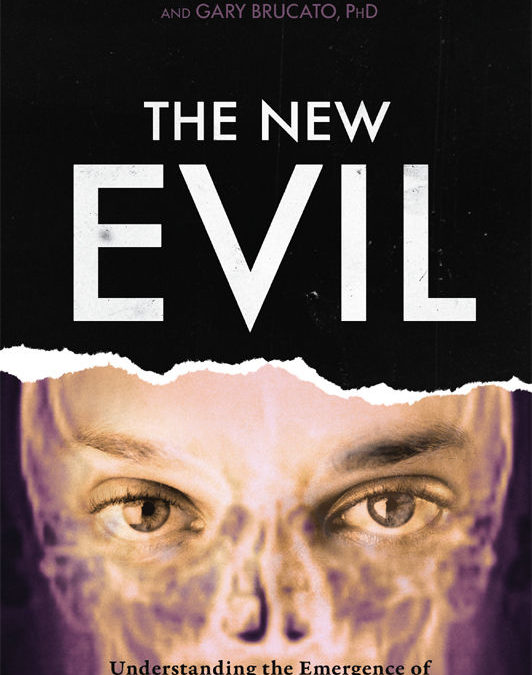
Book review: The New Evil.
When I was first asked to review this book I was a bit sceptical about it. This was mainly because I thought of the term ‘evil’ as problematic. The word ‘evil’ is very subjective and the definition of it can depend on context, societal values, moral values and so on. For me, the word evil has religious connotations. So for this book to claim it had produced a classification system to define how evil an act was a bit odd, or so I thought. I even said to the author ‘I find the idea of ‘evil’ interesting. It is a word that is used a lot, but makes no sense when used alongside psychiatric conditions.’ But Dr Brucato was confident about his work and asked if I’d read it anyway.
Despite being sceptical I read it anyway and was immediately proved wrong. As a researcher, I’m always open to constructive criticism and am willing to change my views. From the very onset, the authors brilliantly define what they mean when they talk about ‘evil’. There are several pages outlining what they mean when they talk about evil. They are also careful to outline what they do not mean as evil. They focus on the acts some people have committed rather than the person themselves. As I have come to realise myself, offenders can have loving and caring relationships and can operate well in some areas of their lives. I once had a lengthy conversation with a gentleman about human rights and we had similar views about this. After that, I found out that he had a violent past which resulted resulting in him killing another man.
Unlike similar books I have read, the authors acknowledge the depraved nature of killers rather than sensationalise their acts. They pause to pay their respects to the victims. The media often reports on violent offenders and gives background details of the offender. Often, little attention is given to the victims. Within criminal psychology, the type of victim can often tell us a lot about the offender.
You could substitute the word ‘evil’ for violence, depraved acts, immoral behaviour and the scale would still work the same way and the book would be just as good. The Gradations of Evil Scale contains 22 categories which are on a continuum. Some acts of murder are not very evil and would be placed at number 1. Other acts of murder are described as being the worst kind of evil and would be placed at number 22.
According to Brucato & Stone, on the Gradations of Evil Scale murderous acts which are placed in categories 1 to 8 are those people who do not have any form of mental illness and are not psychopaths. These murders are committed for reasons such as abuse, impulsiveness, intense feelings of jealousy or anger, self-defence, or loyalty. The authors give detailed examples of actual cases that could be placed into various classifications. Actions which are placed in categories 9 to 22 require an ability to distinguish between psychopathy, narcissism, psychosis, and sadism. Even with someone with no prior knowledge would be able to follow the authors as they lead the reader through these categories. These acts would be committed to conceal evidence, for sport or sexual gratification and would be carried out without any compassion or guilt.
This book walks the line between giving accurate credible information that a professional could relate to, and is well written enough for a layperson to be able to read and enjoy. I have always thought of clinical psychologists being interested in the ‘whole person’. This book does just that, it gives detailed examples of the types of offender that each category has. However, applied psychologists (such as criminal psychologists) are more interested in identifiable and measurable behaviours or acts, which can be statistically tested in order to prove and define them. As I read, I found myself getting very excited about the possibility of testing their categories. I have since asked Dr Brucato if he would like to work with me to do this.
Besides the scale of evil, this book is an excellent source for those who want to learn more about personality disorders and the differences between psychosis, psychopathy, sadism, and narcissism. The book also discusses cultural changes over time and how these can have an impact on behaviour. It also gives some thought as to why rape, murder, and other types of violent behaviour have increased over time.
The book is not solely about the Gradations of evil, it gives insightful discussions into the various sub-sets of murder such as infanticide, women who kill, stalkers, school shooters. These chapters lead the reader through the various attributes and historical increase in their occurrence. As we know, there was a dramatic increase in violent and murder across America from the late 1960s. This is the very reason the FBI set up their Behavioural Science Unit at Quantico. The book discusses some of the possible causes for this ‘new’ evil which has evolved in modern times.
In conclusion, I went from being fairly sceptical about a book with claimed to categorise evil alongside psychiatric terms and personality traits to becoming completely enthralled and captivated by the book. The book is very well written; it was almost as though they knew the reader would think along certain lines and give an insightful opening chapter. It was interesting, engaging, detailed, and quite simply brilliant. I am looking forward to exploring and testing the Gradations of Evil empirically.

by CrimePsych | Feb 11, 2019 | Blog
Analysing behaviours at crime scenes.
The previous blog examined the ways in which crimes may be linked to a common offender. As previously stated, there are a number of ways to explore whether two or more crime scenes are likely to be carried out by the same offender. However, some discussion of which behaviours are most helpful to link crimes is necessary.
In order for a Criminal Psychologist to link an offender to a crime scene, it is important to be clear about which behaviours are most useful. An investigator must have some idea or template of the ways offenders typically behave. Canter & Youngs (2003) highlight the need to establish the salient features of an offence. It is important to identify behaviours which can be useful in identifying the psychological features of an offender.
When examining a particular crime scene, some of the behaviours carried out will be very general and others will be more specific. For example, when a burglary occurs there are always goods stolen and entry is usually forced in some way. These behaviours are not likely to tell us anything about the offender because they occur at the majority of crime scenes. However, information such as the time of day, method of entry, any tools used, or knowledge of alarm systems are likely to reveal something about the offender.
Behaviour can vary and be highly dependent on context. When identifying behaviours at crime scenes it is important to focus on actions which are likely to be repeated. Going back to the burglary example, if an offender came across a person at the residence, there would be some kind of reaction to that (either running away or a confrontation). This response would be specific to that particular crime scene and not necessarily what the offender would do in a different context. However, if the offender took some kind of tool to gain entry this he/she is likely to be consistent in future offences.
Research has shown that many criminals behave in a similar way when offending. Some behaviours are quite general and could be carried out by many offenders. Others are more unique and are more likely to be carried out by one individual. It is these more unique discriminating features of behaviour that will be of most use to Criminal Psychologists when trying to link crime scenes to a common offender.
When establishing which offender characteristics could be inferred from behaviours at a particular crime, Canter suggested that it was important to consider the fact that characteristic ways of behaving would be mirrored in the everyday life of the offender. Canter suggested that the victims the offenders chose, the locations of the crime, and the ways in which people interact would be the same whether a person was carrying out a crime of an everyday interaction. This was based on Routine Activity theory within psychology – we follow a routine and many criminals do not behave dramatically different in various activities. It is unlikely that they would behave in a Jekyll and Hyde way.
For example, if a rapist were to show dominance and control against their victim they would likely to show little respect for women in their everyday lives. If the perpetrator had knowledge that police may hold their DNA they would be likely to remove any evidence from the scene and make the victim bath or shower afterwards. The types of information that could be inferred about an offender comes under 5 general headings: residential location (where the offender is likely to live based on where their crimes have been carried out); criminal biography (showing evidence of forensic awareness and removing evidence); domestic and social characteristics (showing control aggression and dominance over a victim suggests characteristic ways pf treating females in general); personal characteristics (traits such as selfishness, uncaringness, anger issues); and occupational or educational history (meticulous planning can be linked to an organized lifestyle higher levels of intelligence, particular tools used at crime scenes related to a profession, particular types of knots linked to professions etc.
Various types of behaviour by an offender’s behaviour can be related to individual characteristics. When inferring offender characteristics from crime scene behaviour, it is important to keep in mind that this information must be of use to investigating officers in the apprehension, detention, and prosecution of the offender.


