

The psychology of rape

The Psychology of stalking
In this blog, I am going to give you an introduction to the psychology stalking. The definition given in a dictionary is to pursue or approach stealthily. However, this is a very simplistic explanation of stalking. The crown prosecution service defines stalking as repeated and unwanted attention which is unwanted by the victim and causes alarm or distress.
Stalking is legally defined as one offence. However, it incorporates a large number of possible behaviours that develop over time. For example, stalking may be threatening telephone calls, unwanted letters text messages or emails, unwanted gifts being sent, tracking movements, stealing personal property, threats of violence or intimidating behaviour. This can be with a person who is known to the victim or a stranger. It is more common for the perpetrator and victim to know each other, usually in an intimate way. For example, it may be an ex-partner and the emotional ties have been severed, particularly if this happens suddenly.
The most common behaviours in stalking are letters, emails, texts, and gifts. The offender may camp outside the house or workplace of the victim, make announcements about them, spread rumours about them, or destroy their property. In extreme cases, stalking can lead to threats of violence or even rape, assault and murder.
The type of relationship can vary from complete strangers to being well known. Some researchers have focused on classifying such relationships. Where the perpetrator is a stranger, there is usually some pseudo intimate relationship between them. Even when they are strangers, there will be some connection between then in the offender’s mind. The offender may blame a victim for a loss or failure of some kind. The victim may be in the public eye and the offender has developed an imagined relationship with them. Stalkers are mostly male, however, females can also be stalkers.
Because of the diverse nature of stalking, much of the research in this area has been directed towards classifying stalking behaviours and stalking scenarios. Once the various classifications exist, it may then be possible to design interventions and rehabilitation programs for stalkers.
Some researchers have focused on the relationship between the victim and the perpetrator. This is the level and type of interpersonal relationship between them. A researcher named Richie proposed one such classification system in 1994. He suggested that the relationships between stalker and victim could be classified as celebrity stalking, acquaintance stalking, and ex-partner stalking. However, this is a fairly simplistic classification system that excludes some stalkers. For example, what if the stalker had mental health problems, what if the stalker was a stranger and the victim was not a celebrity? Also, what if the stalker was a work colleague?
Other classifications of stalkers also exist and they can focus on various aspects of the stalking. For example, some focus on the relationship between the victim and the perpetrator. Others focus on the psychiatric and mental state of the offender. Some focus on the context of the stalking behaviours and others on the rehabilitation of stalkers. This can be neatly summarised into two classifications: The interpersonal relationship and the nature of the contact between victim and perpetrator.
A classification of stalkers by Harmon and colleagues in 1995 suggested that the stalking behaviour will be either ‘affectionate/amorous’ interactions or ‘persecutory/angry’ interactions. In 1992 Some researchers have defined stalking behaviour in terms of the level of intimacy, or at least level of sought intimacy. Some stalkers are ultimately seeking sexual contact with their victim. Other stalkers may be looking for revenge of some kind. Whilst all of the different research areas being important in their field, it would be more helpful if a theory could focus on all aspects of the relationship between victim and perpetrator.
Canter and Ioannou proposed a comprehensive model of stalkers in 2004. They proposed that rather than being distinct categories, stalking interactions and type existed on a continuum. They suggested that a stalker would see and treat their victims as either an object, a person, or a vehicle.
When the victim is seen as an object, the main objective is control. This is possessive behaviours in which the offender assumes to have ownership of and can control using their various behaviours and interactions. This would include acts such as repeatedly driving past the victim’s workplace, the offender contacting the victim after a restraining order has been put into place, contact with the victim’s family which can become aggressive. This also includes threats and confrontations, or even physical attacks on the victim. The offender would have a complete lack of empathy for the victim. The main characteristic of this style of stalking would be aggression.
When the victim is seen as a vehicle, the main characteristic would be contact, which is sexual. This would be evident in behaviours such as asking to meet, entering the victim’s house, stealing or destroying personal property. The offender is simply using the victim to express his or her desires or anger.
The final category is the victim as a person. As the label indicates, the offender takes an interest in the overall life of the victim. They would research them in various aspects of their life. They may even follow the victim or plant surveillance devices to track their movements. All of these behaviours are an attempt to reduce the level of distance between them both and create a higher level of intimacy. This can be seen as an attempt to form a somewhat normal relationship between the victim and the offender by ‘stealing’ the information and forcing the relationship.
All three of these categories can range from a little to a lot. The level of stalking behaviour depends on the offender. The next stage to this research would be to determine the likely characteristics and relationship between victim and offender. This framework could also form the basis of a rehabilitation program which focuses on building appropriate interpersonal relationships.
However, if I was being stalked I would not be interested in knowing whether the offender saw me as an object, vehicle or person. I would be more interested in knowing what I could do to stop it. The first and most important piece of advice I can give you is to not engage in contact in any form. Even if you were to react violently or emotionally, that is what the offender wants. They want to engage with you and have your attention. Every time you shout leave me alone down the phone or change your habits, it is what the offender is looking for.
Let’s say someone has sent you two letters, and two texts, and left a present at your door and you didn’t want it. That in itself may not be enough for the police to arrest and prosecute them. The main criteria for the police to act is by someone being in fear of their or someone else’s life. In the beginning, you might think that this unwanted contact is a one-off and will stop once they get bored. But they might not get bored. Document everything in as much detail as you can. Keep as much evidence as you can, including keeping texts, emails and photographs, friends accounts as corroboration. All of this evidence will be very valuable should it ever be taken to court.
Never put yourself in danger in gathering evidence though. I’m not suggesting you march outside and take a photo from close to the driver’s window. If you are worried that someone may be stalking you, keep your phone on you at all times. Let people know where you will be and when and tell them what they should do if you don’t turn up. Report each instance to the police and keep a journal of activities. And never engage with the stalker, even if it is negatively. Any contact with you will be seen as positive by them.

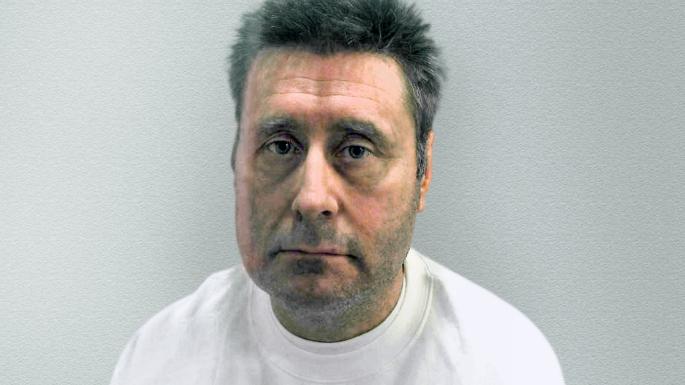
Psychological analysis of Levi Bellfield

Why are there so many theories of crime and which one is right?
There are several disciplines which have proposed the reasons for crime and criminality; these include Sociology, Criminology, and Psychology. Even within these disciplines, there are a variety of theories of crime.
Crime is viewed as a deviation from the social norms within a society. There have been multiple proposals of why some people break the law while others do not. Factors such as age, personality, moral development, gender, attitude, adolescent, personality disorders and upbringing have all shown that they can influence a person’s behaviour. These can be classed into three broad explanations of crime: Biological; Psychological; and Social.
So which one is right? Can we say with 100% accuracy that criminals are either born or made? The simple answer is no, we can never be 100% certain. Each and every theory of crime begins with an experiment or test of some kind. Scientists usually collect data analyse it then make general assumptions about how well we can predict the phenomenon again.
On order to fully explain why each of theories is correct in their own right, I will need to explain the basic research framework. This is a very simplistic explanation just to give you an understanding of the stages in research.
A researcher begins with a question or a problem that requires a solution or explanation. They form their hypothesis, in other words, what they expect to happen or find. They first or all need to decide what type of data they are going to use in their research. When examining crime or criminal behaviour it may be unscripted interviews with offenders, police arrest records, conviction records, carefully worded questionnaires and so on. Then that data is put into a computer program and analysed using complex statistics which will show what can be statistically proven and what cannot be proved.
Then a research paper is written and sent to a journal and is reviewed by several experts in their field. If the experts agree with the findings of the paper it is published. Many different studies put together over time form theories of crime. So one research paper might examine 200 UK offenders and show their findings. Then it is repeated with 200 European offenders or any other group of offenders and supports the original findings.
Over time, every single theory of crime has been proven several times with various participants. Each of these is correct and right in its own right. Researchers may argue amongst each other about the various weaknesses of the data or analysis or conclusions drawn and this is why there are several theories of crime.
The starting point for each explanation of crime is so varied. One group of researchers may start with looking at brain activation patterns in violent offenders and find the same activation patterns in most. Another might look at personality characteristics of violent offenders and find a particular trait is evident in most. Just because one is right doesn’t make the other one wrong – the simply had different research patterns and focuses.


