Analysing behaviours at crime scenes
Analysing behaviours at crime scenes.
The previous blog examined the ways in which crimes may be linked to a common offender. As previously stated, there are a number of ways to explore whether two or more crime scenes are likely to be carried out by the same offender. However, some discussion of which behaviours are most helpful to link crimes is necessary.
In order for a Criminal Psychologist to link an offender to a crime scene, it is important to be clear about which behaviours are most useful. An investigator must have some idea or template of the ways offenders typically behave. Canter & Youngs (2003) highlight the need to establish the salient features of an offence. It is important to identify behaviours which can be useful in identifying the psychological features of an offender.
When examining a particular crime scene, some of the behaviours carried out will be very general and others will be more specific. For example, when a burglary occurs there are always goods stolen and entry is usually forced in some way. These behaviours are not likely to tell us anything about the offender because they occur at the majority of crime scenes. However, information such as the time of day, method of entry, any tools used, or knowledge of alarm systems are likely to reveal something about the offender.
Behaviour can vary and be highly dependent on context. When identifying behaviours at crime scenes it is important to focus on actions which are likely to be repeated. Going back to the burglary example, if an offender came across a person at the residence, there would be some kind of reaction to that (either running away or a confrontation). This response would be specific to that particular crime scene and not necessarily what the offender would do in a different context. However, if the offender took some kind of tool to gain entry this he/she is likely to be consistent in future offences.
Research has shown that many criminals behave in a similar way when offending. Some behaviours are quite general and could be carried out by many offenders. Others are more unique and are more likely to be carried out by one individual. It is these more unique discriminating features of behaviour that will be of most use to Criminal Psychologists when trying to link crime scenes to a common offender.
When establishing which offender characteristics could be inferred from behaviours at a particular crime, Canter suggested that it was important to consider the fact that characteristic ways of behaving would be mirrored in the everyday life of the offender. Canter suggested that the victims the offenders chose, the locations of the crime, and the ways in which people interact would be the same whether a person was carrying out a crime of an everyday interaction. This was based on Routine Activity theory within psychology – we follow a routine and many criminals do not behave dramatically different in various activities. It is unlikely that they would behave in a Jekyll and Hyde way.
For example, if a rapist were to show dominance and control against their victim they would likely to show little respect for women in their everyday lives. If the perpetrator had knowledge that police may hold their DNA they would be likely to remove any evidence from the scene and make the victim bath or shower afterwards. The types of information that could be inferred about an offender comes under 5 general headings: residential location (where the offender is likely to live based on where their crimes have been carried out); criminal biography (showing evidence of forensic awareness and removing evidence); domestic and social characteristics (showing control aggression and dominance over a victim suggests characteristic ways pf treating females in general); personal characteristics (traits such as selfishness, uncaringness, anger issues); and occupational or educational history (meticulous planning can be linked to an organized lifestyle higher levels of intelligence, particular tools used at crime scenes related to a profession, particular types of knots linked to professions etc.
Various types of behaviour by an offender’s behaviour can be related to individual characteristics. When inferring offender characteristics from crime scene behaviour, it is important to keep in mind that this information must be of use to investigating officers in the apprehension, detention, and prosecution of the offender.

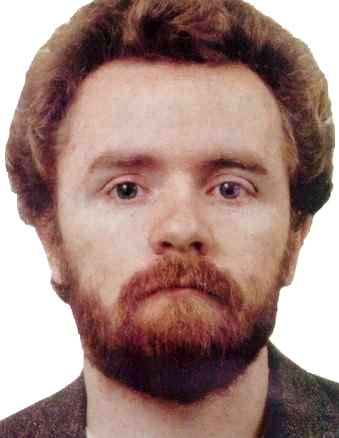
Ted Bundy – American serial killer – murdered over 30 women

Linking crimes
Linking crimes
The term ‘Crime Linking’ is used to describe the practice of examining a series of crimes which are likely to be linked, and identifying which offences are likely to have been committed by the same offender or offenders. There are many terms associated with this practice which include; Comparative Case Analysis; Linkage Analysis; Case Linking; Behavioural Linking; Behavioural Analysis; and Crime Linking. There is a variety of ways that different researchers and law enforcement offices carry this out, however, the underlying assumptions are the same.
The practice of linking crimes rest on two main assumptions. Firstly, it is assumed that offenders are consistent in the way that they behave from one crime to another; this is known as Behavioural Consistency. Secondly, it is assumed that the way one offender behaves as a crime scene will be distinct from behaviour carried out by another offender; this is known as Behavioural Distinctiveness.
It is important to give careful consideration to the behaviours which are examined; these cannot be too specific of too general. For example, if a series of thefts were to be analysed it would be unproductive to examine whether goods were taken or not, as this is too general. Conversely, it would not be fruitful to examine behaviours which are specific to a particular crime scene, such as specific goods taken, as this may be dependent upon the context and availability.
Canter & Youngs (2009) have pointed out that crime is a socio-legal concept, meaning an act is defined as a crime by society. Therefore, if we want to understand consistency in criminal actions it is not appropriate to examine these using the legal definitions of these acts. Canter & Youngs (2009) suggest that any investigation into behavioural consistency needs to be based on well-grounded psychological theories. Canter & Youngs also suggest that criminal activity needs to be examined in terms of types of interactions and how these interactions achieve various objectives.
Youngs (2001) investigates behavioural consistency by defining criminal acts in terms of the type of gain they produce. Youngs suggests that it is possible to differentiate offending behaviours using principals proposed by Bandura (1986) in his Social Cognitive Theory. Youngs proposes that whether a particular behaviour occurs or not is determined by whether there is any incentive for the individual to perform it. Bandura (1986) identifies seven fundamental incentives which drive human behaviour and Youngs suggests that three of them are relevant to criminal behaviours. Youngs suggests that the fundamental incentives of Monetary, Power and status, and Sensory can be applied to all types of criminal activities.
Youngs (2001) suggests that the Monetary incentive may be relevant to offending behaviour where the monetary gain is unlawfully taken from others. Youngs proposes that this desire for monetary gain can be extended to the desire for material goods, as such Youngs labels this as Material gains. Offences such as burglary, robbery and fraud could all be defined as having a Material gain. The Power and status incentive refers to the desire to control other people. Youngs labels this as Power gains and suggests this could represent various forms of violent crime. Finally, Youngs proposes that Sensory incentives are based on the desire for pleasurable experiences and the avoidance of aversive experiences, including boredom. Crimes such as drug taking behaviours could be described as having a Sensory gain.
Although this is only one example of linking crime, it shows that it is possible to identify characteristic ways of dealing with the world and relating to other people that is unique to an individual, meaning it is possible to link similar crimes.